Wrap an extra halyard around the vessels roller furled genoa for extra security against high winds. This is cheap insurance against sail damage when away from the boat for an extended period of time.
At the beginning of each sailing season inspect each fire extinguisher on board to verify that the charge indicator is showing full in the green. Additionally for a dry chemical extinguisher gently tap at the base of the extinguisher using a rubber mallet followed by a vigorous shaking of the extinguisher. This will loosen all the packed dry chemical to insure effective discharge.
Inspect voids, tank internals, bilges, or any hard to access space using a small point and shoot camera equipped with a flash as a blind man's eye. The attached photo is of a diesel engine underside which is normally not visible to the engineer.
Very useful information regarding commercial shipping traffic is available at:
http://www.marinetraffic.com/ais/
Click on a ship location for real time course, speed, destination, name, call sign, registration, size, photo, etc. This gives mariners a powerful tool to improve safety at sea.
Bring back the Tamaya NC-77 almanac from a Y2K death ( as of 4/24/2017 ) is now best done by subtracting 1900 from the current year as explained in a helpful comment listed below. The Geoffrey Kolbe LONG TERM ALMANAC 2000-2050 is still needed to up-date SHA and declination for the navigational stars.
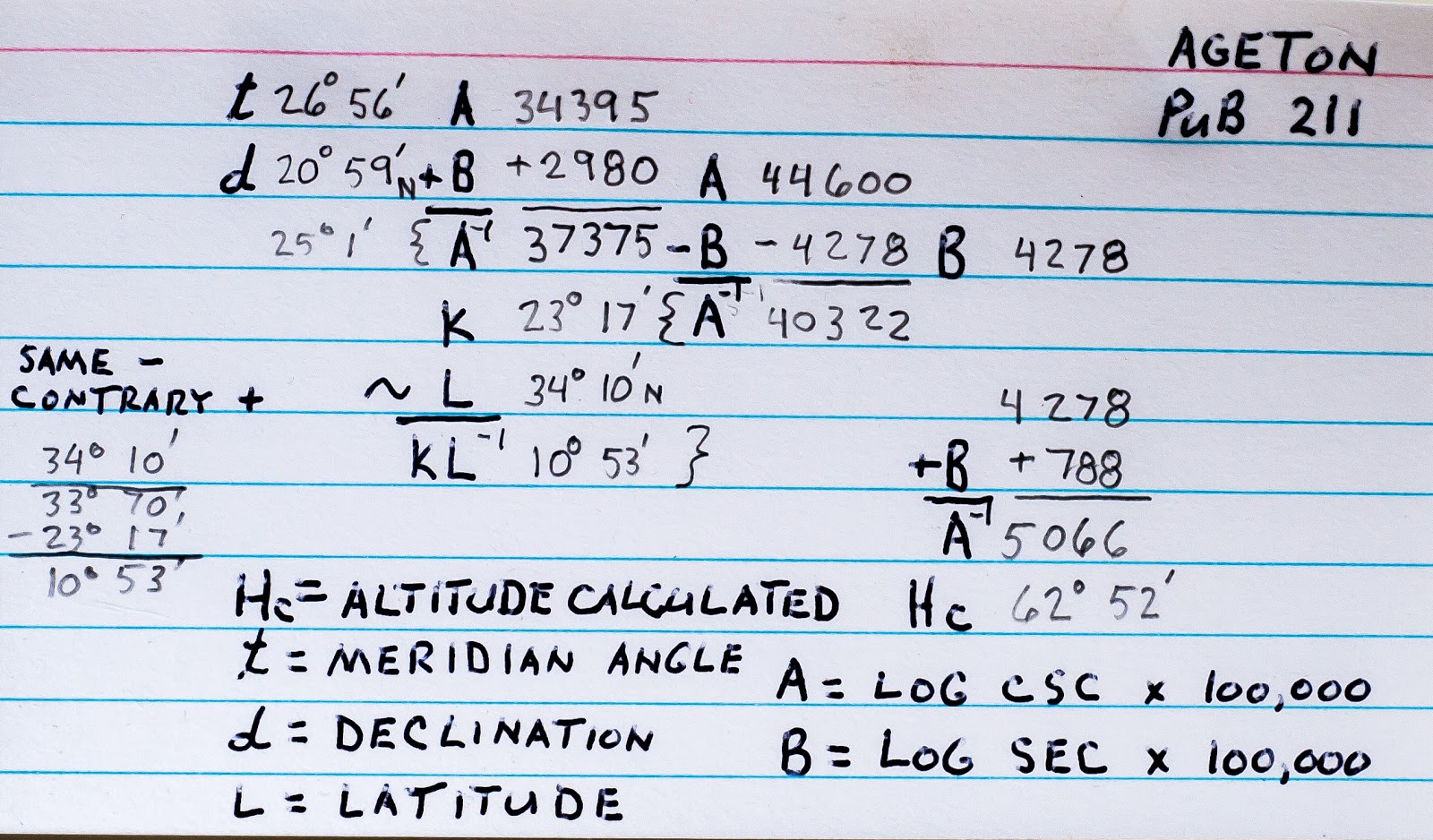
The Ageton method is an excellent alternative to the many celestial navigation sight reduction methods out there. For those not familiar with the Ageton method expect to spend a day practicing to get comfortable with Bowditch table #35 (or H.O. 211) and the suggested summing sequence of A, B, and K values. At first the whole process will seem strange but the method will grow on you each time a sight reduction is completed. Allow ten minutes to obtain an Hc calculated altitude and Z azimuth. The compact size of the tables and being able to use any assumed position are the advantages over Pub. 249 and 229. The whole reduction can be done on one side of an index card.
Flares are worth there weight in gold in an emergency which is why an assortment of flare types should be kept aboard. The 26.5 mm or 25 mm flares are good choices that launch higher and brighter than 12 gauge flares for night and twilight over the horizon signaling. Increase the chance of being seen by coordinating a flare launch on the VHF radio using two fired flares with the first flare for attracting attention and the second to confirm a bearing. For signaling short of the horizon hold a hand held flare to leeward using a leather glove. If no signaling devices are at hand then improvise by using an onboard mirror to signal during the day and a camera flash or laser pointer to signal by night.