Wednesday, June 22, 2011

HandiTak Chart Corners


A pea sized ball of HandiTak is just right for securing chart corners down on the chart table. This will put an end to the sliding of charts onto the deck. HandiTak generally will not rip a chart when removed but just in case tape the corners with clear packing tape.

Wednesday, June 8, 2011

Sextant Arc Maintenance


Clean old lubricant and grime from a sextant arc with GoJo hand cream. GoJo makes several types of cleaning solutions so it is important to use the one which is GRIT FREE and contains LANOLIN. Apply liberally then run the worm gear through the arc a few times. Wipe dry with a clean rag and follow up with a light oil applied a few drops at a time onto the worm gear as the micrometer drum is turned through the arc. Try Hoppe's #9 light oil for a gum free final touch.

http://www.gojo.com/united-states/market/automotive/products.aspx?pscat={2DCDC7EB-6048-4686-8021-95D684DA8ACF}&Cpn={BB2D686E-1BA0-408B-9D72-0E2C0CA21A7F}

http://www.hoppes.com/products/lube_weatherguard.html

Wednesday, May 11, 2011

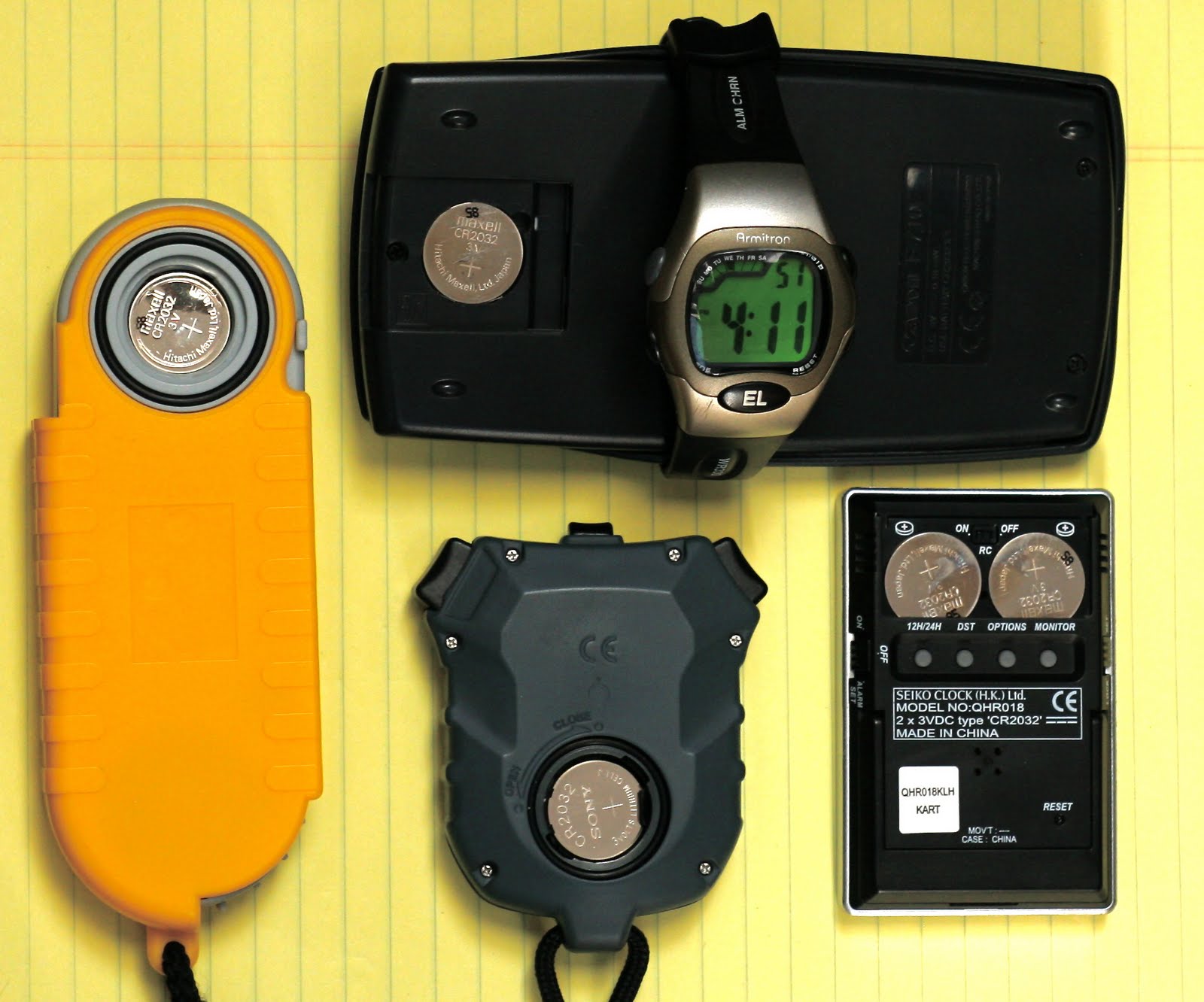
The Lithium CR2032 Battery For Watch and Calculator


All of the pictured portable electronic devices are powered by the same common affordable lithium CR2032 battery. The CR2032 battery is about the size of a nickle and provides five years of power for watches and calculators. Batteries can be swapped between devices in the event of battery failure. The CR2032 has a longer than average shelf life so spares will have plenty of voltage when needed. Device battery type is as important as function for making the grade at the chart table.

Monday, April 18, 2011

Shaft Zinc Installation Tip # 27


Apply a pinch of handitack on the zinc hardware nut to secure and prevent loss during the underwater installation. Keep available extra hardware in the event nuts or bolts are dropped to the bottom.

Friday, April 15, 2011

Dutchman's Log

When the knot log fouls and the GPS goes on the blink then there is always the Dutchman's Log for estimating the speed through the water. Just count the number of seconds a bit of floating material takes to travel from bow to stern to get knots.

Use the formula:
Boat Length in nautical miles / drift seconds from bow to stern = Knots / 3600 seconds in an hour

Example for 33 ft. boat given 6076 ft. in a nautical mile and 3600 seconds in an hour:

Formula: .00543 NM boat length / drift seconds = knots / 3600 sec.

Knots = .00543 x 3600 / drift sec.

Knots = 19.6 / drift sec.


Table of Speed Though the Water for 33ft. Boat

9s = 2.2 kts.
8s = 2.5 kts.
7s = 2.8 kts.
6s = 3.3 kts.
5s = 3.9 kts.
4s = 4.9 kts.
3s = 6.5 kts.

http://en.wikipedia.org/wiki/Chip_log

Saturday, April 2, 2011

Sextant Scope Filter


Index error (I.E.) can be determined more precisely during the day by using a custom fitted solar mylar film filter (the type used to observe a solar eclipse) over the objective lens on the sextant scope. The result will be a pair of sharp uniform orange Sun images. Overlap the Sun images for direct index error readings or take half of the difference between the two limb to limb readings.

note:
-When off the arc the reading is 60' minus the micrometer value.

-Shading the sextant scope directly allows the horizon mirror shades to be pulled aside which opens up better access for the adjustment tool.

Link: http://www.thousandoaksoptical.com
Thousand Oaks Optical (928)692-8903

Friday, January 7, 2011

Ex-Meridian by Formula

The Ex-Meridian can be done by formula for improved precision over Bowditch vol.2 tables #29 and #30. (current edition table #24)

Formula :

(a) = 1.9635 x COS Latitude x COS Declination / SIN (Lat. ± Dec.*)
*RULES (+) if Lat. & Dec. are contrary in name. (-) if Lat. & Dec. are the same name.


Ex-Meridian Correction in minutes of arc to be added to Sun (Ho) near LAN (upper transit) :

Ex.Correction' = (a)( Time from LAN in minutes and tenths)^2 / 60

or

Ex.Correction' = (.267)(a)( Meridian Angle in degrees and tenths)^2

Example:

Lat.34°N Dec.20°S (Sun observed 20 minutes 30 seconds before LAN)

(a) = 1.9635(Cos 34)(Cos 20)/Sin (54) = 1.89
Ex.Corr.' = (1.89)(20.5)(20.5)/60 = 13.24' added to (Ho)

or

Ex.Corr.' = (.267)(1.89)(5.125)(5.125) = 13.24' added to (Ho) *

The corrected (Ho) is then reduced as a normal LAN to get the Latitude at the time of observation.


*Try a formula variant that uses meridian angle vs. time
.267 (a)(Meridian Angle)^2 = Ex.Correction' file:///Users/greg/Desktop/factors.html